
SEO
Most Effective SEO Title Tag Formulas for 2026
Search has changed dramatically. Google AI Overviews, conversational search, and generative engines are transforming how users discover information....
Read More
On-page SEO is one of the most important parts of building a successful website. It helps search engines understand your content while improving the user experience for visitors. No matter if you have a business site, blog, eCommerce store, or portfolio, optimizing your pages boosts your visibility in search results. This helps attract steady organic traffic.
For beginners, on-page SEO might seem technical. However, it mainly improves:
Search engines like Google look at these factors. They want to find which pages give the best experience and the most relevant information.
At Smart BrandX, businesses and website owners can learn modern SEO strategies. These strategies help boost rankings, increase traffic, and improve conversions. A strong on-page SEO strategy ensures every page on your website is optimized for both users and search engines.
This beginner’s guide covers “what is on-page SEO?”, its importance, and how to use effective techniques to improve your search rankings.
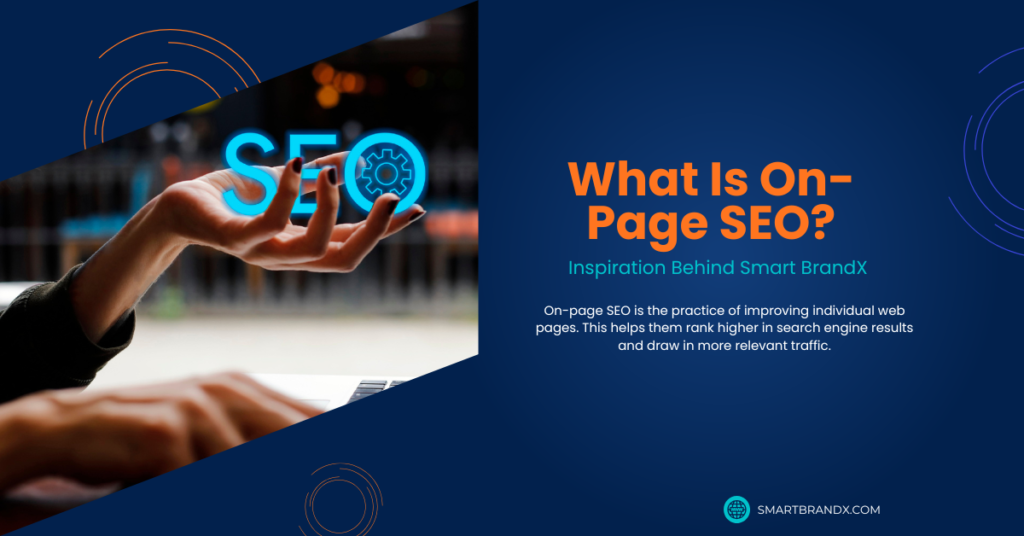
On-page SEO is the practice of improving individual web pages. This helps them rank higher in search engine results and draw in more relevant traffic.
It focuses on improving:
On-page SEO is different from off-page SEO. While off-page SEO looks at backlinks and outside signals, on-page SEO focuses on what you can control on your own website. Search engines look at these elements to see what your content covers. They also check if it meets user intent.
Effective on-page SEO helps search engines crawl and index your pages correctly. It also improves the experience for visitors by making content easier to read, navigate, and understand.
Modern on-page SEO is not just about inserting keywords repeatedly. Search engines now rank relevance, helpfulness, expertise, readability, and user satisfaction. Pages that answer search queries clearly and provide valuable information are more likely to rank higher.
At Smart BrandX, businesses learn to mix content strategy, keyword optimization, and technical upgrades. This helps them create pages that do well in tough search results.
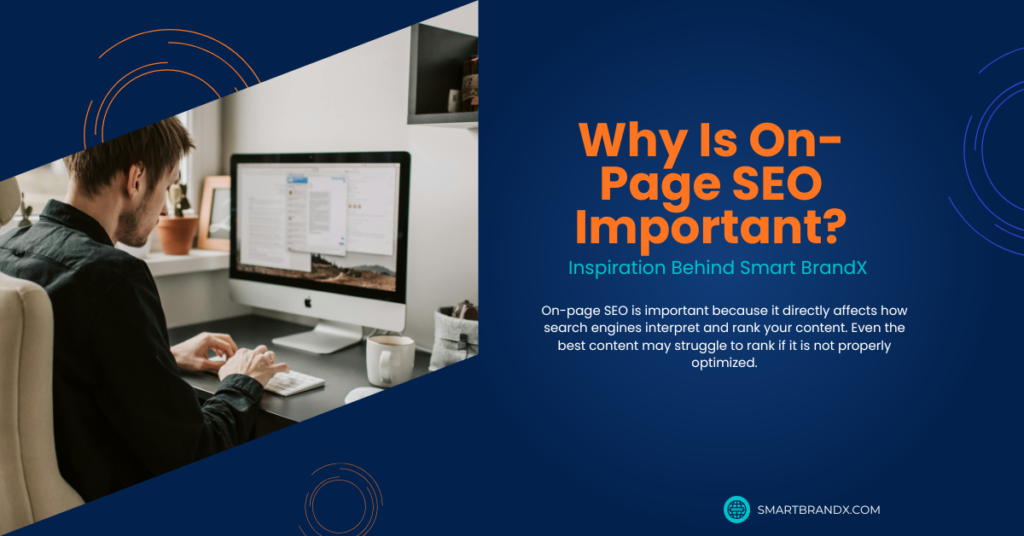
On-page SEO is important because it directly affects how search engines interpret and rank your content. Even the best content may struggle to rank if it is not properly optimized.
Search engines use hundreds of ranking signals to determine which pages deserve top positions. Many signals come from “what is on-page SEO” elements. These include headings, keywords, content quality, page structure, and internal linking.
Strong on-page SEO helps websites:
A properly optimized page also improves accessibility and usability for visitors. Clear headings, easy formatting, quick loading speeds, and helpful content keep users on your site longer. They also encourage more interaction.
On-page SEO is very valuable for small businesses and startups. It provides long-term results and doesn’t depend only on paid ads. Once pages rank well, they can continue generating traffic consistently.
At Smart BrandX, businesses find useful SEO methods. These strategies boost rankings and enhance the user experience.
On-page SEO and off-page SEO are both key for a full SEO strategy. They target different areas.
What is On-page SEO refers to optimizations made directly on your website. This means enhancing content, title tags, keywords, internal links, images, headings, and page speed. The goal is to help search engines understand your content while improving user experience.
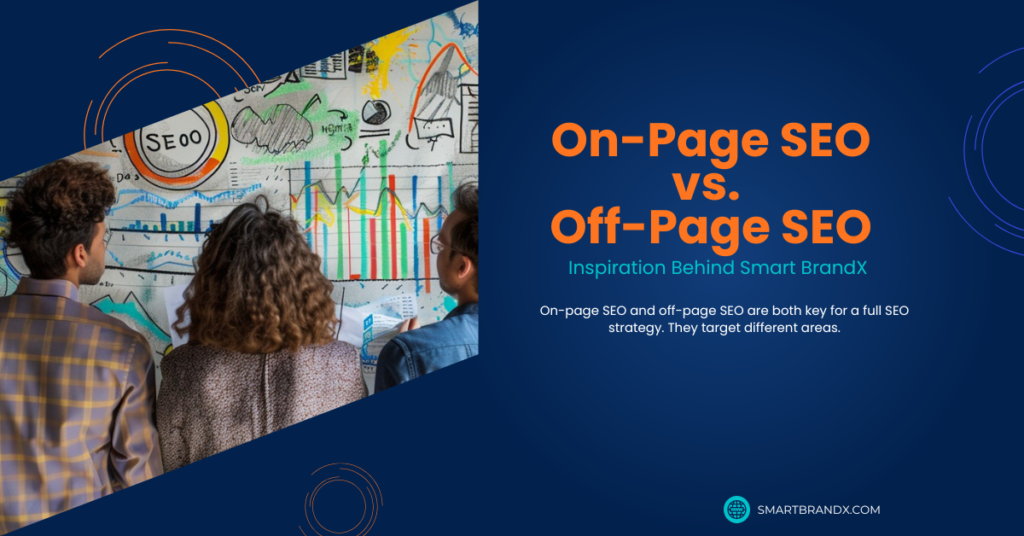
What is Off-page SEO focuses on activities outside your website that influence authority and trust. The most common example is backlink building. When reputable websites link to your content, search engines see your site as more credible.
Here are the main differences:
| On-Page SEO | Off-Page SEO |
|---|
| Focuses on website content | Focuses on external signals |
| Includes keywords and headings | Includes backlinks and mentions |
| Improves user experience | Builds website authority |
| Controlled directly by website owner | Influenced by external websites |
| Helps search engines understand pages | Helps improve trust and credibility |
Both strategies work together. Even if you have high-quality backlinks, weak on-page SEO can prevent pages from ranking effectively. Similarly, excellent on-page optimization may struggle without authority signals.
Smart BrandX helps businesses build balanced SEO strategies. They combine strong on-page optimization with effective off-page techniques.
Successful on-page SEO requires consistency, strategy, and attention to detail. This 11-item checklist highlights key techniques. Use it to boost rankings, increase organic traffic, and enhance user experience.
Strategic keyword placement helps search engines understand your page’s topic and relevance. Place keywords in key areas where they fit naturally. Avoid stuffing them unnaturally.
Search engines now focus heavily on semantic relevance and user intent. This means you should also include related phrases, contextual prompts, and long-tail keywords.
Best practices include:
Keyword placement should improve clarity rather than disrupt readability. Content that sounds natural performs better for both users and search engines.
At Smart BrandX, businesses discover how to balance keyword optimization and engaging content writing.
Title tags are one of the most important what is on-page SEO elements because they tell search engines and users what your page is about. A strong title tag improves visibility and click-through rates.
Your title should clearly describe the page content while encouraging users to click.
Best practices for title tags:
Example:
Good Title: “What Is On-Page SEO? Beginner’s Guide for Higher Rankings”
Weak Title: “SEO SEO SEO Guide Best SEO”
An optimized title tag improves both search rankings and user engagement.
Smart BrandX emphasizes creating optimized titles that increase visibility while maintaining readability and trust.
URL slugs help search engines, and users understand page topics quickly. Short, descriptive URLs are easier to read, share, and index.
A clean URL structure also improves overall website organization.
Best practices for URL optimization:
Example:
Good URL: example.com/what-is-on-page-seo-guide
Poor URL: example.com/page?id=4567&seo=abc
Optimized URLs improve user trust and search engine understanding.
At Smart BrandX, SEO specialists focus on creating organized website structures that support better crawling and indexing.
Meta descriptions summarize page content in search engine results. While they may not directly impact rankings, they strongly influence click-through rates.
A compelling meta description encourages users to visit your page.
Best practices for meta descriptions:
Example:
“Find out what is on-page SEO. Explore effective strategies to boost rankings, increase traffic, and enhance user experience.”
Strong meta descriptions help your pages stand out in search results.
Smart BrandX helps businesses make better metadata. This boosts visibility and gets more clicks.
Headings organize content into readable sections and help search engines understand page structure.
Well-structured content improves readability, accessibility, and SEO performance.
Best practices for headings:
A strong heading structure allows users to scan content while helping search engines identify key topics.
At Smart BrandX, we focus on clear content strategies. This helps improve readability and structure. As a result, we boost engagement and rankings.
Content quality is one of the most important ranking factors. Search engines prioritize pages that provide valuable, original, and relevant information.
Your content should answer user questions clearly and completely.
Best practices for content creation:
Helpful content builds trust, improves engagement, and increases the likelihood of earning backlinks.
Smart BrandX encourages businesses to create audience-focused content that supports long-term SEO growth.
Internal links connect pages on your website. They also help search engines see how your site is organized.
They also guide users toward related content and improve navigation.
Best practices for internal linking:
Strategic internal linking distributes authority throughout your website and improves indexing.
At Smart BrandX, businesses discover how to create SEO-friendly site structures. They use smart internal linking strategies to boost their visibility.
External links to trustworthy websites help support your claims and improve content credibility.
Search engines value pages that reference authoritative sources.
Best practices for external linking:
Credible references improve user trust and strengthen topical relevance.
Smart BrandX recommends using authoritative sources to enhance content quality and expertise.
Image optimization helps search engines understand visual content while improving accessibility.
Proper image SEO can also increase visibility in image search results.
Best practices for image optimization:
Example:
Good File Name: what-is–on-page-seo-checklist.jpg
Poor File Name: IMG_12345.jpg
Optimized images improve performance, accessibility, and SEO.
Smart BrandX helps businesses improve visual content for search engines and user experience.
Page speed is a major ranking factor because users expect fast-loading websites.
Slow pages can increase bounce rates and reduce conversions.
Best practices for improving page speed:
Fast websites improve user satisfaction and search rankings.
At Smart BrandX, we focus on making websites fast and responsive. This helps boost SEO growth.
Schema markup is structured data that helps search engines better understand your content.
It can improve visibility through rich results and enhanced SERP features.
Best practices for schema markup:
Schema markup can help your pages appear with enhanced search features such as star ratings, FAQs, and rich snippets.
Smart BrandX helps businesses use structured data strategies. This boosts visibility and click-through rates.
Tracking performance is essential for understanding whether your SEO strategy is working. Monitoring rankings, traffic, CTR, and SERP visibility helps identify opportunities for improvement.
Keyword rankings help measure how visible your pages are in search results.
Key metrics to monitor:
Tracking keyword positions helps identify successful optimization strategies.
Organic traffic shows how many visitors reach your website through search engines.
Important traffic indicators include:
Increasing organic traffic usually indicates successful SEO optimization.
CTR measures how often users click your pages after seeing them in search results.
Ways to improve CTR:
Higher CTR often leads to increased traffic and engagement.
SERP features increase visibility beyond standard organic listings.
Track appearances in:
Optimized content and structured data improve your chances of earning SERP features.
AI-driven search experiences are becoming more important in modern SEO.
Check:
Creating authoritative, high-quality content increases the likelihood of AI citations.
Smart BrandX helps businesses adapt their SEO strategies for evolving AI-powered search environments.
On-page SEO is the foundation of a successful digital marketing strategy. By optimizing content, keywords, metadata, page speed, internal links, and user experience, businesses can improve search rankings and attract more organic traffic.
Modern SEO focuses on creating valuable, user-centered experiences rather than simply inserting keywords. Websites that provide helpful content, strong technical optimization, and clear site structure are more likely to succeed in competitive search results.
At Smart BrandX, businesses can discover practical SEO strategies designed to improve visibility, traffic, and long-term growth. Consistently implementing these on-page SEO techniques can help your website rank higher and achieve sustainable online success.
On-page SEO refers to optimizing the content and structure of your website pages to improve search engine rankings and user experience. Smart BrandX provides beginner-friendly SEO guidance for businesses and website owners.
On-page SEO helps search engines understand your content and improves your chances of ranking higher in search results, leading to more organic traffic.
Key factors of what is on-page seo include keywords, title tags, meta descriptions, headings, content quality, internal links, page speed, and image optimization.
SEO results vary depending on competition and website authority, but many websites begin seeing improvements within a few weeks to several months.
Both are important. On-page SEO improves website quality and relevance, while off-page SEO builds authority through backlinks and mentions.
Regular updates are recommended to keep content accurate, relevant, and aligned with search engine algorithm changes.
Yes. Beginners can learn on-page SEO by understanding keywords, content optimization, headings, metadata, and website structure. Smart BrandX shares practical SEO insights for beginners.
Yes. Smart BrandX offers valuable resources, blogs, and strategies that help businesses improve SEO performance, increase visibility, and grow online.
Search has changed dramatically. Google AI Overviews, conversational search, and generative engines are transforming how users discover information....
Read MoreFor more than a decade, marketers have repeatedly claimed that SEO is dead in 2026. Every major Google...
Read MoreSearch engine optimization has changed dramatically over the last few years. In 2026, SEO writing is no longer...
Read More