
SEO
Most Effective SEO Title Tag Formulas for 2026
Search has changed dramatically. Google AI Overviews, conversational search, and generative engines are transforming how users discover information....
Read More
Search engine optimization (SEO) is a great way to boost online visibility and draw in organic traffic. However, not all SEO practices follow search engine guidelines. Black hat SEO uses dishonest methods to boost search engine rankings. It focuses on tricking systems instead of offering real value to users.
These tactics might boost rankings for a while, but they break search engine rules and can result in serious penalties. Websites using black hat SEO can face ranking drops, lose traffic, get deindexed, and harm their online reputation for a long time.
It takes advantage of search engine flaws. It uses tactics like keyword stuffing, cloaking, hidden text, link schemes, and content automation. These methods might give a short-term boost in rankings, but search engines today are very good at spotting manipulation.
At Smart Brand X, we believe sustainable growth comes from ethical SEO strategies that prioritize user experience and search engine compliance.
For businesses that want sustainable growth, black-hat SEO is a risky strategy that can destroy years of hard work. Organizations should prioritise ethical SEO practices. This means focusing on user experience, making valuable content, and aiming for long-term search visibility instead of quick wins.
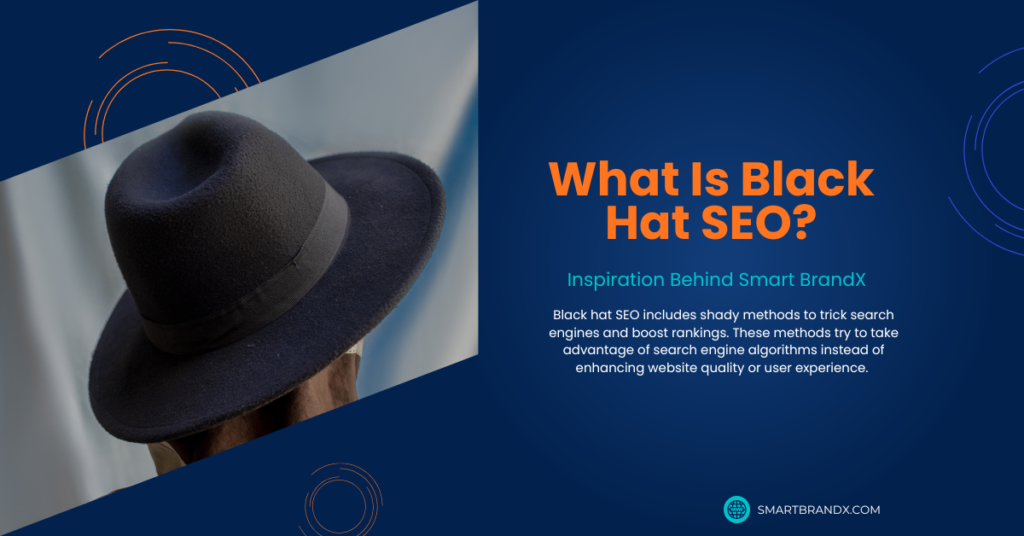
Black hat SEO includes shady methods to trick search engines and boost rankings. These methods try to take advantage of search engine algorithms instead of enhancing website quality or user experience. The term “black hat” comes from old Western movies. In these films, villains wore black hats to show they were dishonest.
The primary goal of this SEO is to achieve higher rankings quickly. Many practitioners skip creating valuable content, earning natural backlinks, and improving website performance. Instead, they take shortcuts that break search engine rules. While these tactics may generate temporary results, they often lead to penalties when detected.
Search engines like Google update their algorithms all the time. They do this to spot websites that use manipulative practices. As a result, black hat SEO has become increasingly risky and ineffective in the long run.
Businesses using black hat techniques can face significant consequences. These include lower visibility, loss of organic traffic, and damaged credibility. In extreme cases, search engine results pages (SERPs) might even remove them.
Ethical SEO aims to provide high-quality content. It also enhances website usability and builds trust with users and search engines.
At Smart Brand X, we recommend focusing on ethical SEO strategies that align with search engine guidelines and deliver lasting results.
Key Characteristics of Black Hat SEO:
Ultimately, black hat SEO is a high-risk strategy that may offer temporary benefits but often results in long-term losses.
| Factor | Black Hat SEO | White Hat SEO |
| Definition | Uses manipulative techniques to improve rankings. | Uses ethical methods that comply with search engine guidelines. |
| Goal | Achieve quick ranking improvements. | Build sustainable organic growth. |
| Search Engine Compliance | Violates search engine rules. | Fully follows search engine policies. |
| User Experience | Often ignores user needs. | Prioritizes user satisfaction and engagement. |
| Content Quality | Frequently relies on duplicate, thin, or automated content. | Focuses on valuable, original, and informative content. |
| Link Building | Uses paid links, link farms, and schemes. | Earns backlinks naturally through quality content. |
| Risk Level | Extremely high. | Very low. |
| Long-Term Results | Unstable and temporary. | Sustainable and long-lasting. |
| Brand Reputation | Can damage trust and credibility. | Enhances authority and trustworthiness. |
| Algorithm Updates | Often negatively impacted. | Usually benefits from updates. |
| Cost of Recovery | Can be expensive and time-consuming. | Requires ongoing optimization but avoids penalties. |
| Penalties | High likelihood of manual or algorithmic penalties. | Minimal risk of penalties. |
| Traffic Stability | Traffic may disappear suddenly. | Traffic growth is generally steady. |
| Business Impact | Can result in lost revenue and visibility. | Supports long-term business growth. |
The key difference between black-hat SEO and white-hat SEO is intent. Black hat SEO attempts to manipulate rankings, while white hat SEO focuses on creating value for users and earning visibility naturally.
Search engines rely on smart algorithms, machine learning, and manual review teams to find websites that break SEO rules. Modern search engines look at billions of web pages. They can quickly spot suspicious patterns linked to manipulation.
Google looks at many ranking signals. These include content quality, backlink profiles, user engagement, website structure, and spam indicators. When unusual behavior is detected, algorithms may reduce rankings automatically.
Search engines use spam detection systems. These systems keep an eye on websites for strange activities. In some cases, websites receive manual actions after being reviewed by search quality teams.
Machine learning has greatly enhanced how search engines spot advanced black hat tactics. Even techniques that once worked effectively can now be identified with remarkable accuracy.
Common Detection Methods:
As search engines change, black-hat SEO is harder to hide. So, ethical optimization is now the safest and most effective choice.
This SEO includes various tricks that aim to unfairly boost search engine rankings. While these methods might bring quick results, they usually lead to harsh penalties if found out.
A common technique is keyword stuffing. This means adding too many keywords to the content in an unnatural way. Another tactic is cloaking, which presents different content to search engines and users.
Some website owners take part in link schemes. They buy backlinks or join private blog networks (PBNs). Others use automated content generation tools to publish large quantities of low-quality content.
These tactics aim to exploit ranking algorithms rather than provide genuine value to visitors.
Common Black Hat SEO Techniques:
Some of these methods may look effective initially, but search engines are improving. They can spot and punish manipulative behaviour more easily.
Recovering from a black-hat SEO penalty means:
The process can be challenging, but it is essential for restoring rankings and traffic.
The first step is conducting a comprehensive SEO audit to identify problematic practices. Website owners should check backlinks, content quality, technical SEO, and user experience.
If the penalty is caused by unnatural backlinks, harmful links should be removed or disavowed. Duplicate content, hidden text, and keyword stuffing should be eliminated immediately.
For manual actions, website owners may need to submit a reconsideration request after fixing all violations. Recovery can take weeks or months, depending on the severity of the penalty.
Steps to Recover from a Black Hat SEO Penalty:
Patience is key during recovery. Search engines need time to review the website after you make corrections.
Black hat SEO may seem attractive because it promises rapid ranking improvements, but the risks far outweigh the benefits. Search engines are getting better at spotting manipulation. As a result, penalties are now more common than ever.
A website hit with a penalty can quickly lose years of built-up authority and organic visibility. Businesses often see big drops in traffic, leads, conversions, and revenue after a penalty.
Beyond search engine penalties, this SEO damages brand credibility. Users who see spammy content, misleading redirects, or bad experiences are less likely to trust the business.
Additionally, recovering from penalties often requires significant financial investment, technical expertise, and time.
Reasons to Avoid Black Hat SEO:
For long-term business success, ethical SEO remains the safest and most profitable approach.
Avoiding black-hat SEO starts with knowing search engine rules. It also means sticking to ethical optimisation methods. Businesses should focus on creating genuine value rather than attempting to manipulate rankings.
The foundation of sustainable SEO is high-quality content that addresses user needs and search intent. Websites should prioritize relevance, originality, and user experience.
Link-building should aim to earn backlinks naturally. You can do this by making useful resources, forming industry connections, and creating trusted content. Technical SEO improvements should also enhance website performance rather than exploit algorithm weaknesses.
Regular SEO audits can help identify potential issues before they become serious problems. Staying informed about algorithm updates and industry best practices is equally important.
Best Practices to Avoid Black Hat SEO:
Ethical SEO might take more time to show results. But it leads to sustainable growth, better rankings, and lasting online authority.
Black hat SEO seems appealing for quick rankings and traffic, but it’s actually one of the riskiest strategies for any website. Search engines like Google get smarter every day. They keep updating their algorithms to find and punish manipulative tactics. A quick fix today may lead to big problems for your website later.
For businesses and creators, the safest and most effective path is always ethical SEO. White-hat strategies focus on quality content, user experience, and long-term authority building. These methods may take more time, but they deliver stable rankings, consistent traffic, and stronger brand trust.
At Smart Brand X, we advise against black hat SEO. Instead, focus on sustainable SEO practices to protect your website’s future. In the digital world, success isn’t about fooling search engines. It’s about earning trust, offering value, and creating a lasting online presence.
Black hat SEO is generally not illegal, but it violates search engine guidelines. Using black hat techniques might not get you in legal trouble, but it can cause serious penalties from search engines. This includes losing rankings and getting deindexed. Some tactics, such as hacking websites or creating malicious redirects, may cross legal boundaries. Businesses should focus on ethical SEO practices to avoid risks and maintain a positive online reputation.
Yes, black hat SEO can quickly boost rankings. It takes advantage of weaknesses in search engine algorithms. However, these gains are typically temporary. Once search engines identify the manipulation, rankings often decline dramatically. The short-term gains often don’t match the long-term effects, so black hat SEO isn’t a reliable way to grow sustainably.
Keyword stuffing remains one of the most common black hat SEO tactics. This technique involves overloading content with keywords in an attempt to improve rankings. Modern search engines can spot unnatural keyword use. They may penalise websites that do this. High-quality, naturally written content is a much more effective and sustainable alternative.
Recovery time depends on the severity of the penalty and the corrective actions taken. Minor issues may be resolved within a few weeks, while major penalties can take several months to recover from. Websites that fix violations, enhance content quality, and follow search engine rules tend to recover better over time.
In many cases, yes. Buying links to boost rankings goes against search engine guidelines. Links should come naturally from quality content. Disclosed sponsored content is fine, but hidden link schemes can cause penalties and hurt search visibility.
White hat SEO is the safest and most effective alternative. It aims to create valuable content, improve user experience, boost website performance, and earn natural backlinks. White hat SEO takes time and steady effort, but it leads to long-term rankings, steady traffic growth, and stronger brand authority without the risk of penalties.
Search has changed dramatically. Google AI Overviews, conversational search, and generative engines are transforming how users discover information....
Read MoreFor more than a decade, marketers have repeatedly claimed that SEO is dead in 2026. Every major Google...
Read MoreSearch engine optimization has changed dramatically over the last few years. In 2026, SEO writing is no longer...
Read More